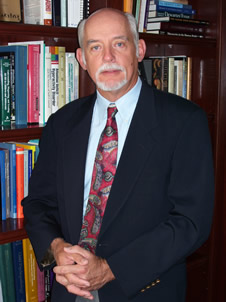
Russell A. Barkley, Ph.D. Internationally Recognized ADHD Authority
After serving in the United States Air Force Dr. Barkley obtained his Bachelor's Degree with Honors in Psychology from the University of North Carolina at Chapel Hill in 1973. He then attended Bowling Green State University in Ohio where he received his Masters Degree in 1975 and his Ph.D. in 1977 in Clinical Psychology, receiving the Distinguished Dissertation Award for his research on the effects of medication on children with ADHD. He then attended the Oregon Health Sciences University for internship training in developmental, learning, and behavioral disorders of children. Thereafter, in 1977, he joined the Department of Neurology at the Medical College of Wisconsin (MCOW) and Milwaukee Children's Hospital where he worked in the Child Neurology Division and eventually founded the Neuropsychology Service at MCOW. He served as its Chief and as Associate Professor of Neurology until 1985. Dr. Barkley then relocated to the University of Massachusetts Medical School, where he served as the Director of Psychology and as a Professor of Psychiatry and Neurology (1985-2002). While there, he established the research clinics for both child and adult Attention Deficit Hyperactivity Disorders. In 2003, Dr. Barkley relocated to the Charleston, SC area where he became a Professor in the Department of Psychiatry at the Medical University of South Carolina. In 2005, he joined the faculty of the Department of Psychiatry at the SUNY Upstate Medical University in Syracuse, NY.
Dr. Barkley has been awarded a Diplomate (board certification) in three specialties, these being Clinical Psychology (ABPP), Clinical Child and Adolescent Psychology, and Clinical Neuropsychology (ABCN, ABPP). He is a clinical scientist, educator, and practitioner who has authored, co-authored, or co-edited 20 books and clinical manuals. He has published more than 200 scientific articles and book chapters related to the nature, assessment, and treatment of ADHD and related disorders (see Publications). In 1993, he founded a bimonthly newsletter for clinical professionals, The ADHD Report (Guilford Publications). He has created seven professional videotapes on ADHD and defiant children, three of which have won national awards, including the 1992 and 1994 Golden Apple Award for educational videos from the National Education Association. Dr. Barkley has served on the editorial boards of 11 scientific journals and as a reviewer for numerous others. He was the President of the Section of Clinical Child Psychology, Division 12, of the American Psychological Association (1988), and was President of the International Society for Research in Child and Adolescent Psychopathology (1991).
Dr. Barkley has presented more than 600 invited workshops, public addresses, and scientific presentations internationally, including Australia, New Zealand, Belgium, Israel, Russia, Kenya, Venezuela, Sweden, Denmark, Norway, Iceland, Finland, Spain, Italy, Canada, and Great Britain. He has appeared on many nationally televised programs to discuss topics pertaining to ADHD, including: Today (NBC TV, August 1991), A Closer Look with Faith Daniels (NBC TV, June 1991), and Good Morning America (ABC TV, August 1992; June 1994; August, 1998); Eye-to-Eye with Connie Chung (CBS TV, June 1994), 60 Minutes with Leslie Stall (CBS-TV, November, 1995), Real Life (NBC-TV, March & September 1996), Day & Date (February 1996), Leeza with Leeza Gibbons (ABC-TV, March 1996), The Early Show with Bryant Gumbel (CBS, Sept. 2000), the BBC (November, 2000), Frontline (PBS, April, 2001), Investigative Reports (A & E, April, 2001) and on a variety of regional radio and television programs throughout North America and internationally. He also assisted the following major magazines and newspapers, among others, with stories on ADHD: Newsweek, Time, Scientific American, Newsday, Readers Digest, The New Yorker, Parents Magazine, Woman’s Day, Cosmopolitan, Wall Street Journal, New York Times, Washington Post, Washington Times, Detroit Free Press, Los Angeles Times, Boston Globe, Charlotte Observer, San Francisco Chronicle, Philadelphia Inquirer, and Sydney Morning Herald.
He has received numerous awards over his career for his work in ADHD and the field of psychology. In 1994, he received the Distinguished Contribution Award from the American Association of Applied and Preventive Psychology, and in 1996, he was awarded the C. Anderson Aldrich Award from the American Academy of Pediatrics for his research career in child development. In 1998, he received the Award for Distinguished Contribution to Research from the Section on Clinical Child Psychology, (now Division 53) of the American Psychological Association. In 2002, he received the Dissemination Award from the Society for a Science of Clinical Psychology, Division 12, of the American Psychological Association for his career long efforts to dispel misconceptions about ADHD and to educate the public and other professionals about the science of this disorder. And in 2005, he received an award for distinguished service to the profession of psychology from the American Board of Professional Psychology.
Awards, Honors, and Fellowships
Phi Beta Kappa, Alpha Chapter, University of North Carolina at Chapel Hill, August 1973.
Distinguished Dissertation Award in Education and the Social Sciences, Bowling Green State University, Ohio, June 1978.
Letters of Commendation for superior performance in the graduate program, Department of Psychology, Bowling Green State University, Ohio, for academic years 1974-75 and 1975-76.
Fellowship, National Institute of Mental Health, in clinical psychology, Bowling Green State University, Ohio, for three consecutive academic years, 1973-76.
Landsdowne Visiting Scholar, University of Victoria, British Columbia, Canada, October 1980.
Psychology Research Award, Wisconsin Psychological Association, 1984.
Honorable Mention, Cindy Award - 1992, Association of Visual Communicators, for the videotape ADHD: What Do We Know?, produced with Kevin Dawkins Productions and Guilford Publications.
Golden Apple Award (1993), National Education and Film Video Association for the videotapes ADHD: What Do We Know? and ADHD: What Can We Do?, produced with Kevin Dawkins Productions and Guilford Publications.
Golden Apple Award (1995), National Education and Film Video Association for the videotapes ADHD in the Classroom, produced with Kevin Dawkins Productions and Guilford Publications.
Nominated for Best Educational Film of the Year, International Health and Medical Film Festival, San Francisco, CA, February 1994, for the videotapes ADHD: What Do We Know? and ADHD: What Can We Do?, produced with Kevin Dawkins Productions and Guilford Publications.
Named one of the best child mental health professionals in the United States, Good Housekeeping magazine, January 1994.
Commencement Speaker, Wayne Community College, Goldsboro, NC, May 1994.
Distinguished Contribution Award, Association for the Advancement of Applied and Preventive Psychology, July 1994, Washington, DC.
Inducted into the ADD Hall of Fame, Annual National Meeting of CHADD (Children and Adults with Attention Deficit Disorders), October 14, 1994.
Mentor Award, Massachusetts State Science Fair, April 29, 1995, Massachusetts Institute of Technology, Boston, MA.
C. Anderson Aldrich Award for Research on Child Health and Development, Division of Developmental and Behavioral Pediatrics, American Academy of Pediatrics, November 1996, Boston, MA.
Finalist for best video in the Professional Education/Patient Information category, New York Festival Media Competition for Managing the Defiant Child, by R. A. Barkley, created with Guilford Publications and Kevin Dawkins Productions, January 16, 1998.
Distinguished Contribution to Research Award, Section on Clinical Child Psychology, Division 12, American Psychological Association, August 1998, San Francisco.
President’s Award, Wisconsin Psychology Foundation, for service to the Foundation and to children and adults with ADHD, May 1999, Madison, WI.
Outstanding Educator Award for Mental Health Education, New England Educational Institute, August 1999, Cape Cod, MA.
2002 SSCP Science Dissemination Award, Society for a Science of Clinical Psychology, Section 3, Division 12, Annual Meeting of the American Psychological Association, August 2002, Toronto.
2004 Distinguished Service Award to the Profession of Psychology, American Board of Professional Psychology, Inc., Annual Meeting of the American Psychological Association, August 2004, Hawaii.
Full Disclosure
Critics of ADHD and especially of Dr. Barkley have often mistakenly claimed that he receives large amounts of support from drug companies. Below is an actual listing of the proportion of income he has recently received (tax year 2004):
State of Massachusetts (5%)
(retirement from University of Massachusetts Medical School)
Medical University of South Carolina (salary) (8%) based on:
U.S. Department of Education (service grant)
National Institute of Child Health and Human Development (research grant)
National Institute of Mental Health (research grant to Univ. of Maryland)
Eli Lilly Co. (research grant)
McNeil Pharmaceuticals (U.S.) and Janssen-Ortho (Canada) (speaker fees) (1%)
Shire Pharmaceutical Co. (Consulting/speaker fees) (<1%)
Pfizer Pharmaceuticals (<1%)
Eli Lilly Co. (Speaker/Consulting fees) (<8%)
Guilford Publications (Book and newsletter royalties) (32%)
Compact Clinicals (Product royalty) (1%)
Miscellaneous health care and educational organizations (speaker fees) (43%)
|